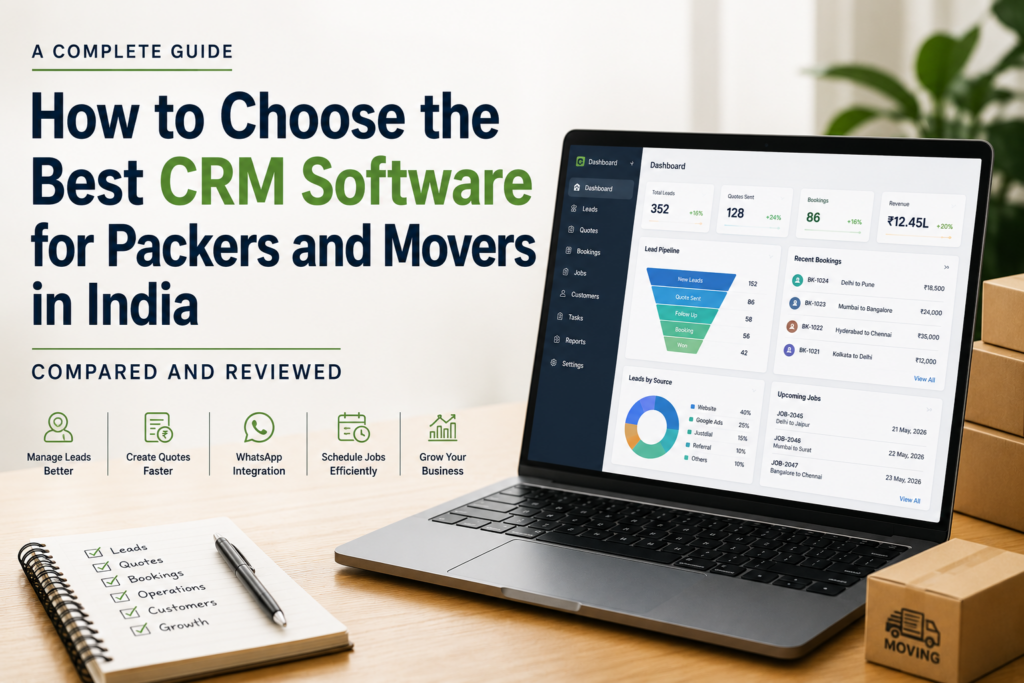
Running a packers and movers business in India in 2026 is genuinely competitive, and the gap between companies that are growing and companies that are struggling is increasingly coming down to one thing: how well they manage their leads, quotes, and customer relationships. If you are still recording queries in a notebook, responding to them on WhatsApp by typing them in yourself, or forgetting which one was quoted and which one vanished, then you must be very well aware of the problem. CRM software for packers and movers exists specifically to solve this, but the market is crowded with generic options that weren’t built for the moving industry, and finding the right fit takes more than a quick Google search. In essence, this blog is an earnest effort to tell you about all those things that really do matter while selecting a CRM for packers and movers, what some of the most viable solutions are in India today, and how you can make your choice based on your requirements. Why Generic CRM Software Doesn’t Work for Moving Companies Before getting into specific features and comparisons, it’s worth addressing why so many moving companies have tried generic CRM tools, such as Zoho, Salesforce, and HubSpot, and found them underwhelming or overly complex for their specific needs. Generic CRM platforms are built for a broad range of sales processes across industries. They’re designed to be flexible and customisable — which means significant setup time, often requiring dedicated implementation expertise to configure them for a moving company workflow. They handle contacts and pipelines well. What they don’t handle natively is the specific operational reality of a moving business: quote generation that accounts for volume, distance, packing materials, vehicle type, and labour — and the need to deliver that quote fast enough that the customer doesn’t book with a competitor while you’re still calculating. In the moving industry, speed of quotation is one of the most significant factors in lead conversion. A customer who sends an inquiry to three or four companies books with the first one that gives them a clear, professional quote. Companies using generic CRMs — where generating a quote involves manual calculation, copy-pasting into a template, and then sending through a separate channel — are routinely losing customers to competitors who can turn around a professional quote in minutes. This is the gap that moving company software built specifically for packers and movers fills — and it’s why industry-specific tools consistently outperform generic ones for businesses in this sector. What to Actually Look for in a Packers and Movers CRM The feature checklist for packers and movers management software is more specific than the feature list for a general CRM. Here’s what genuinely matters for an Indian moving company in 2026: Fast, Accurate Quote Generation This is non-negotiable. The right CRM should allow you to generate a complete, professional moving estimate in a matter of minutes, not hours. The system should account for all the variables that affect moving cost: pickup and delivery locations, move type (residential, commercial, local, intercity), approximate volume or number of items, packing materials required, vehicle type, floor access, and any special items. The quote output should be professional enough to send directly to the customer — not a rough calculation they have to ask follow-up questions about. A PDF or WhatsApp-formatted estimate that looks polished and includes all the relevant information builds customer confidence and reduces back-and-forth that delays the booking decision. WhatsApp Integration In India, WhatsApp is not just a messaging app — it’s the primary business communication channel for a huge proportion of SMEs and their customers. A moving company CRM India that doesn’t integrate with WhatsApp is missing the channel through which most moving inquiries are received, and most customer communication happens. WhatsApp integration should be more than just a button that opens the app. It should enable sending formatted quotes, follow-up messages, booking confirmations, and job updates directly through the CRM interface — so that every customer communication is logged in the system and no inquiry falls through the cracks because it happened through a channel that wasn’t tracked. Lead Pipeline Management A good moving company CRM should give you a clear, visual picture of every lead in your pipeline — where they came from, what stage they’re at, what action is needed next, and how long they’ve been at each stage. This visibility is what allows a small team to manage a large volume of inquiries without dropping leads. The pipeline should be customisable to your specific sales process. For most moving companies, this looks something like: new inquiry → quote sent → follow-up scheduled → booking confirmed → job in progress → completed → reviewed. Seeing all your leads across these stages simultaneously tells you immediately where the gaps are and where attention needs to go. Follow-Up Automation One of the most consistent revenue leaks in Indian moving companies is leads that received a quote, expressed interest, and then went cold because nobody followed up at the right moment. Manual follow-up systems — reminders in a notebook, WhatsApp messages sent when someone remembers — are inconsistent. Automated follow-up sequences that trigger at the right intervals after a quote is sent consistently improve conversion rates without requiring additional staff time. Job Scheduling and Operations Tracking Beyond the sales process, a comprehensive packers and movers customer management system should connect the lead-to-booking process with the operational delivery of the move. Once a booking is confirmed, the relevant team should see the job details, the crew should be assigned, the vehicle should be scheduled, and the move should be trackable through completion. This operational continuity — from first inquiry through completed delivery and review is what separates a basic sales CRM from a full moving company software platform. Reporting and Business Intelligence A CRM that doesn’t tell you where your business is actually coming from and which parts of your process are working is a missed opportunity. Good reporting for a